Stairwell and narrow-lift challenges around Nags Head
Posted on 18/06/2026
Stairwell and narrow-lift challenges around Nags Head: a practical moving guide
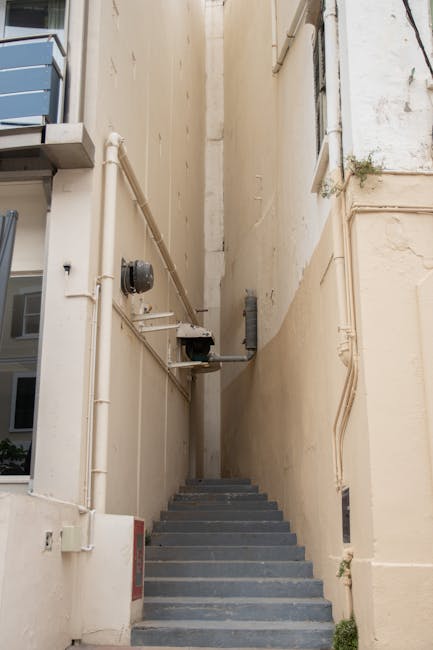
Moving in and out of flats around Nags Head can be a bit of a squeeze. One minute everything looks straightforward, the next you are staring at a tight stairwell, a lift that barely fits a person and a bag of shopping, and a sofa that suddenly looks far too ambitious. If you are dealing with stairwell and narrow-lift challenges around Nags Head, you are not alone. It is one of those everyday London moving problems that sounds simple until the first awkward turn, the low bannister, or the tiny landing says otherwise.
This guide breaks the process down in plain English. We will look at why these access issues matter, how they affect planning, what the safest moving approach looks like, and when it makes sense to bring in specialist help. You will also get a practical checklist, a comparison table, and a few real-world pointers that can save time, stress, and the odd chipped wall. Let's face it, nobody wants moving day to turn into a game of furniture Tetris.
Why Stairwell and narrow-lift challenges around Nags Head Matters
Nags Head has plenty of homes and buildings where access is not designed for easy moving. Flats above shops, older conversions, busy shared stairways, and compact lifts all create the same basic problem: bulky items have to travel through spaces that were never made for bulky items. That matters because a move is not only about getting things from A to B. It is about getting them there without damage, without delays, and without someone straining their back halfway up the stairs.
The real issue is that access constraints affect almost every part of a move. They influence how many people are needed, which items should be dismantled, where the van can stop, and whether the job can be done in one visit or needs a more staged plan. A move that looks quick on paper can become slow and physically demanding once you meet a tight stairwell or a lift with an awkward internal shape. In our experience, that is where many DIY moves start to wobble.
There is also a neighbour factor. Shared hallways, narrow landings, and thin-walled stairwells mean every bump, scrape, and heavy footstep tends to carry. A careful plan helps keep the peace, which is honestly underrated. Few things sour a move faster than a complaint before the kettle is even unpacked.
If your move involves heavy furniture, white goods, or awkward items like mattresses or pianos, access planning becomes even more important. For extra background on safer handling methods, it can also help to read a guide to solo heavy object lifting and the mechanics of kinetic lifting, both of which explain why smart technique matters as much as strength.
How Stairwell and narrow-lift challenges around Nags Head Works
The basic idea is simple: first you assess the route, then you prepare the items, then you move in the safest order possible. In practice, though, the route assessment is where the value is. A staircase may have a bend that blocks a wardrobe, a lift may be too shallow for a sofa at full length, and a hallway may be so tight that turning an item inside it feels impossible unless it is partially dismantled first.
Good movers start by mapping the whole journey, not just the front door. That means checking:
- the width of each stair flight
- the shape and size of landings
- the lift door width and interior space
- ceiling height on turns and landings
- whether handrails or fixtures reduce clearance
- how close the van can park to the entrance
Once you know the route, you decide what needs to be broken down, wrapped, or moved in a different order. A bed frame may come apart cleanly. A fridge may need door restraints. A table may have legs removed to make an awkward corner manageable. The lift may only work for lighter boxes, while larger items are carried via stairs. That is normal. It is not a failure; it is sensible planning.
For flat moves, packing approach matters more than people expect. Boxes that are too large become unmanageable on stairs. Boxes that are too heavy make lift loading risky. If you want a useful companion read, packing hacks to save time and space when moving and how to move a bed and mattress efficiently both cover the sort of preparation that makes tight-access moves much easier.
Key Benefits and Practical Advantages
When the access plan is right, the whole move feels calmer. Not perfect, just calmer. And on moving day, calm is gold.
- Less damage risk: careful route planning reduces knocks to walls, bannisters, doors, and furniture edges.
- Faster loading and unloading: you are not stopping every five minutes to rethink how a sofa will turn.
- Better safety: a clear lift-and-carry plan lowers the chance of slips, strains, and awkward solo lifts.
- Lower stress: fewer surprises means fewer rushed decisions in the stairwell.
- More accurate scheduling: you can plan labour and vehicle time with a lot more confidence.
There is also a practical cost benefit. Poor access often causes delays, and delays have a habit of becoming extra time, extra labour, or sometimes extra vehicle mileage. If you are trying to understand where moving costs can creep up, it is worth reading about hidden fees when moving in Nags Head and street access tips for N19 moves so you can spot the pressure points early.
Expert summary: the best stairwell and lift strategies are rarely dramatic. They are mostly about preparation, item breakdown, sensible box sizes, and choosing the right order. Small choices add up. That is the whole trick.
Who This Is For and When It Makes Sense
This kind of planning is useful for anyone moving from a flat, maisonette, converted property, student accommodation, or a building with shared access. In Nags Head, that often includes people moving along busier roads or in and out of upper-floor homes where the lift is compact, the landing is narrow, or the stairs curve in a way that makes large furniture awkward.
It makes sense if you are moving:
- from or to a top-floor flat
- with bulky furniture like wardrobes, beds, or sofas
- with fragile items that need slow, careful handling
- with limited help on the day
- on a tight schedule, such as same-day or end-of-tenancy moves
- with office equipment, retail stock, or specialist items
It is especially relevant for people who do not want to gamble with DIY lifting. A tiny lift can make even a medium-sized move surprisingly technical. That does not mean you need to panic. It just means you need the right plan and, in some cases, the right people. If you are a student, a tenant, or moving a shared flat, you may also find the tenant move checklist for Holloway Road in Nags Head and student removals in Nags Head useful as a wider planning base.
Truth be told, once the item list gets beyond a few manageable boxes, access planning stops being optional and starts being the sensible thing to do.
Step-by-Step Guidance
Here is a practical order that works well for tight-access moves. It is not fancy, but it does the job.
- Measure the route before moving day. Check stair width, lift dimensions, landing size, and any awkward bends. If you can, measure the largest item too. A sofa that is too long for the turn is the classic headache.
- Separate items into carryable groups. Decide what can go in the lift, what must be carried up the stairs, and what should be dismantled first.
- Reduce item bulk early. Remove drawers, legs, shelves, and loose fittings where possible. Wrap screws and fittings in labelled bags. Future you will be grateful.
- Pack to a sensible weight. Use smaller boxes for books, crockery, and dense items. Large boxes are fine for pillows and light bedding, but not for heavy mixed loads.
- Protect the route. Use blankets, edge guards, or floor protection where needed. Shared hallways are not the place to test your luck.
- Load in the right order. Put the easiest access items on first and keep the awkward ones for when the route is clear and the team is warmed up.
- Move one item at a time when needed. A quick pause and reset can be better than forcing an angle that clearly is not working. You will notice the difference immediately.
- Check the destination before unloading. Make sure the room layout is ready so nobody is carrying a heavy chest of drawers only to realise it will not fit through the bedroom door anyway.
For furniture-heavy moves, it often helps to pair this approach with the right service type. If your move is mostly bulky household items, furniture removals in Nags Head can be more suitable than trying to muscle everything through a narrow stairwell yourself. And if the whole move is a simpler point-to-point job, man with a van in Nags Head or man and van in Nags Head may fit the brief better.
Expert Tips for Better Results
A few practical habits make a big difference in tight spaces.
First, use the lift wisely. A small lift is not just a box on the wall; it is a loading tool. Keep it balanced, avoid overfilling, and send lighter items first if that helps you establish a rhythm. Nothing dramatic, just controlled and tidy.
Second, watch the corners. Most damage happens on turns, not on straight runs. Corners are where grip changes, someone steps backwards too quickly, or a piece catches a rail. Slow down there.
Third, communicate clearly. One person should call the move. Short instructions work best: stop, lift, turn, clear, down. A moving team talking over each other in a stairwell is a recipe for confusion. And probably a few muttered apologies.
Fourth, keep one eye on the weather and street access. In busy parts of London, parking and kerb access can be just as important as the stairwell itself. Rain makes steps slick; evening light makes corners harder to judge. It sounds obvious, but on the day it is easy to forget.
Fifth, think about dismantling in advance. Do not wait until the landing before deciding a table leg should come off. That moment is usually a bit late.
If you are handling delicate or specialist items, such as pianos or large appliances, it is sensible to study item-specific planning too. The articles the dos and don'ts of piano moving and how to store a freezer efficiently are useful examples of how access problems change the moving method.
Common Mistakes to Avoid
Most stairwell and lift problems are manageable. The trouble starts when people assume they will be manageable without any planning. That is where things go a bit sideways.
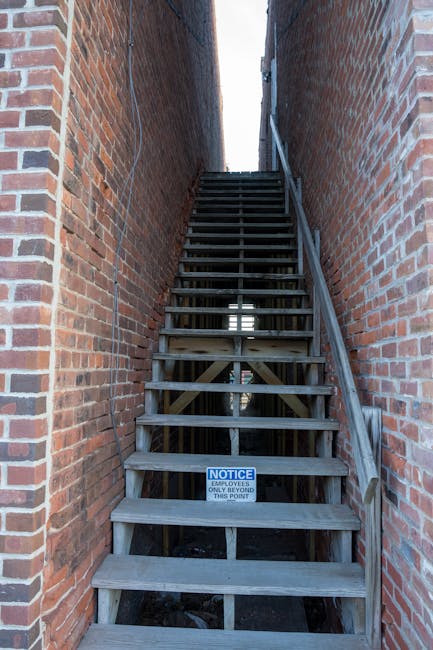
- Using oversized boxes: they are awkward to hold, hard to rotate, and a pain on stair landings.
- Ignoring lift dimensions: the lift door might be wide enough while the internal depth is not. That catches people out all the time.
- Skipping dismantling: a wardrobe that could have been broken into panels becomes a wall-sized problem instead.
- Underestimating weight: a box that feels fine at floor level can become awful after three flights of stairs.
- Not protecting walls and banisters: even a small bump can leave marks, which is especially frustrating in rented accommodation.
- Trying to rush awkward items: speed and narrow access do not mix well.
- Leaving access checks until the van arrives: by then, the pressure is on and good decisions get harder.
There is a smaller, more human mistake too: people sometimes try to "just get it done" when they are already tired. Fair enough, moving is exhausting. But tired hands and narrow stairs are a poor combination. If you feel that moment coming on, pause. Breathe. Reset the plan. It saves trouble later.
Tools, Resources and Recommendations
You do not need a warehouse of kit, but a few basics help enormously.
- Furniture blankets: useful for protecting edges and softening bumps in tight hallways.
- Straps and grips: good for keeping control when carrying larger pieces.
- Sturdy gloves: helpful for grip and hand protection.
- Small to medium boxes: far better than one heroic box full of books.
- Label tape and marker pens: essential for item identification and room placement.
- Protective floor covering: especially useful in communal spaces or freshly cleaned flats.
- Basic tool kit: screwdrivers, hex keys, and a few resealable bags for fittings.
For planning and support, the most useful resources are usually the ones that help you reduce volume before moving day. A sensible declutter can make a huge difference, and decluttering tactics for a smooth transition and packing and boxes in Nags Head are both practical places to start. If the move is urgent, same-day removals available in Nags Head may also be worth considering.
And if you are trying to decide between a broader service or a more focused one, the services overview and removal services in Nags Head pages can help you compare the shape of the job before you commit.
Law, Compliance, Standards, or Best Practice
For domestic moves, the biggest legal and practical concerns are safety, property care, and fair handling of goods. You do not need a law degree to get this right, thank goodness. But you do need to follow sensible UK moving practice.
In general, best practice means:
- not blocking shared fire routes or common entrances for longer than necessary
- protecting communal floors, walls, and lift interiors where reasonable
- using safe lifting methods rather than improvised solo handling
- making sure anyone helping understands the plan before carrying heavy items
- checking building rules if the property management has access restrictions or move windows
If you are dealing with a managed building, there may be access booking rules for lifts or loading bays. These vary, so it is worth checking early. Likewise, if the move involves your employer's equipment, office furniture, or commercial stock, a more formal approach to health and safety is sensible. If that is your situation, office removals in Nags Head and commercial removals for Nags Head market traders may give you a better sense of planning expectations.
A trustworthy mover should also be clear about insurance and safety. That does not mean they promise the impossible; it means they explain how they handle risk, what is covered, and what preparation they need from you. The pages on insurance and safety and health and safety policy are helpful for understanding the standard you should expect.
Options, Methods, or Comparison Table
Different access problems call for different approaches. Here is a simple comparison to help you decide what suits your move.
| Method | Best for | Pros | Limitations |
|---|---|---|---|
| DIY stair carry | Small loads, light boxes, a few accessible items | Lowest cash outlay, flexible timing | Higher strain, slower, greater damage risk |
| Lift-assisted move | Flats with a usable lift and moderate furniture | Reduces stair carrying, often faster | Lift size may still limit item choice |
| Partial dismantling and staged move | Awkward furniture, narrow landings, mixed loads | More adaptable, safer on turns | Takes planning and tools |
| Specialist removal support | Bulky items, fragile pieces, time-sensitive moves | Efficient, safer, less stressful | Usually costs more than a pure DIY approach |
There is no perfect universal option. The right one depends on the items, the route, and the time you have. A one-bedroom flat with boxes and a bed frame is a very different job from a third-floor move with a sofa, a freezer, and a piano. They should not be treated the same, even if they both start with the same front door.
Case Study or Real-World Example
Here is a typical Nags Head scenario. A tenant is moving out of a second-floor flat with a narrow internal staircase and a lift that technically works, but only for one person and a couple of boxes at a time. The biggest items are a bed frame, mattress, small fridge-freezer, a two-seat sofa, and several mixed boxes.
On paper, that sounds like a short move. In reality, it has all the usual friction points: one awkward landing, one tight lift, and a corridor that narrows at the exact point where the sofa needs to turn. The smart approach would be to dismantle the bed frame before the van arrives, move the fridge-freezer separately with protection in place, and keep the boxes small enough for safe lift use. The sofa might be handled last, once the route is fully clear and two people can take their time on the turn.
What tends to make the difference is not brute strength. It is sequence. In a move like this, a five-minute rethink before the first carry can save half an hour later. That is not dramatic, just true. And the person moving out usually ends the day feeling much less battered than expected.
If the tenant had less time, they might combine careful packing with a quick support option from man and van in Nags Head or a more flexible removal van service. For people on a tight deadline, that flexibility can be the difference between a settled evening and an absolute scramble.
Practical Checklist
Use this checklist before moving day if you are dealing with stairs, lifts, or awkward access.
- Measure stairs, lift dimensions, landings, and doorways
- Check whether the lift can be booked or protected
- Identify furniture that should be dismantled
- Pack heavy items into smaller boxes
- Label all boxes by room and fragility
- Protect walls, floors, corners, and bannisters where needed
- Confirm parking and unloading access near the building
- Set aside tools, tape, blankets, and bags for fittings
- Keep walkways clear at both properties
- Plan the order of loading and unloading
- Tell neighbours or building management if required
- Allow extra time for the first awkward items
Quick rule: if it feels heavy, awkward, and twisty, it probably needs more planning than you first thought. That simple.
For final prep, a few more useful reads include pre-move cleaning guidance, house moving made easy, and recycling and sustainability if you are reducing clutter responsibly before the move.
Get a free quote today and see how much you can save.
Conclusion
Stairwells and narrow lifts are not just minor inconveniences. Around Nags Head, they shape the whole moving experience. They influence packing, timing, safety, labour, and whether a piece of furniture makes it out in one piece. The good news is that with the right measurements, a realistic plan, and sensible handling, these challenges become manageable rather than maddening.
If you take one thing from this guide, let it be this: the safest move is usually the one that respects the space. Do that, and the rest becomes much easier. A bit slower maybe, but cleaner, calmer, and far less stressful. Which, on moving day, is worth a lot.
And when the last box is in the right room and the stairwell is finally quiet, that small feeling of relief is lovely. Proper lovely.